
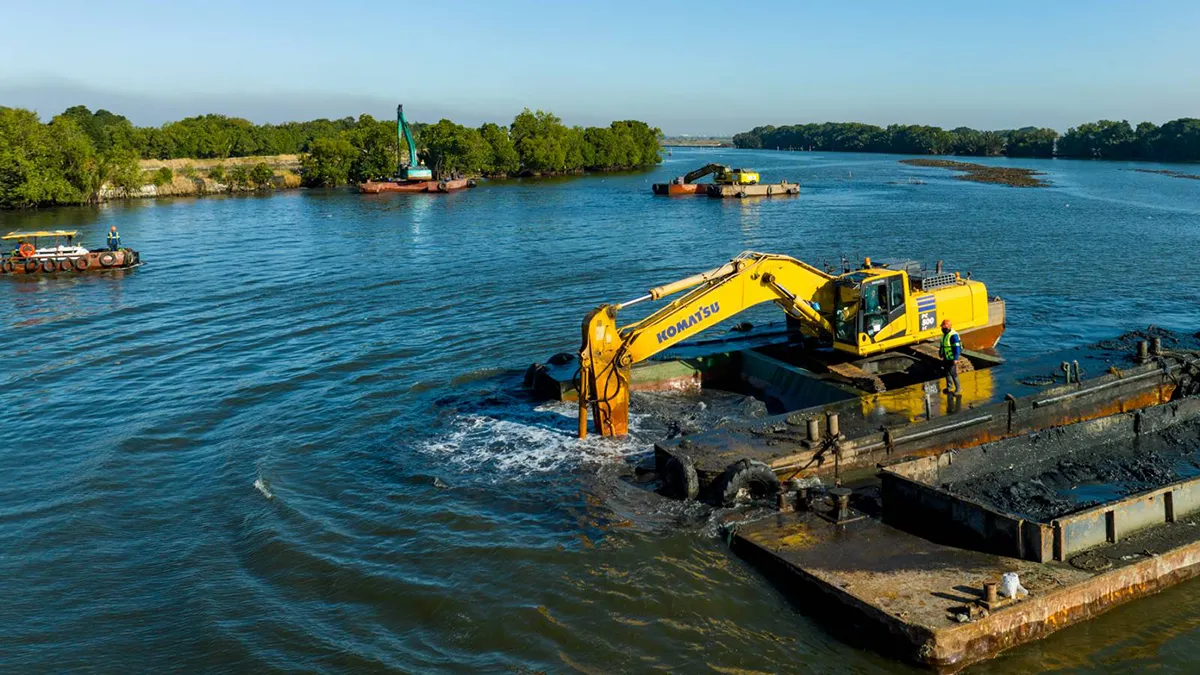
San Miguel Corporation (SMC) is nearing completion of its massive river cleanup in Bulacan, having removed over 4.2 million tons of silt and waste.
This effort, spanning 74 km of waterways, is the largest volume extracted in SMC’s Luzon-wide initiative.
The project, part of SMC’s “Better Rivers PH” advocacy, comes at no cost to the government or taxpayers. It has been running since 2020 and covered the Tullahan, Pasig, and San Juan rivers in Metro Manila, among others.
SMC’s Bulacan cleanup has removed waste from major rivers, including the Taliptip-Maycapiz-Bambang, Meycauayan, Marilao, and Mailad-Sta. Maria, Guiguinto, Balagtas, Pamarawan, Kalero, and Labangan-Angat Rivers.
“Our river cleanup initiative in Bulacan is now in its second year; so far, it is the most extensive of all the river cleanups we have done. The total volume of wastes and silt we have removed here—4,255,398 tons—is about twice the combined volume we extracted from the Pasig and Tullahan rivers,” said SMC chairman and chief executive officer Ramon S. Ang.
With the Bulacan cleanup nearing its end, SMC is setting its sights on the Pampanga River. It also seeks to expand cleanup efforts in Binan, Laguna, and Paranaque City.
Ang underscored the significance of dredging and eliminating blockages in the rivers to minimize flooding impacts exacerbated by factors such as low-lying terrain, deforestation, trash obstructing water flow, increasing sea levels, land sinking, and too many fish ponds.
Typhoon Carina brought about unprecedented heavy rainfall that caused widespread flooding in Metro Manila and surrounding provinces.
While flooding was experienced in many areas, Ang said the situation could have been a lot worse, had it not been for their completed river cleanup efforts, which effectively increased the carrying capacity of rivers and ensured their continuous flow.
“Flooding is a complex problem with multiple causes and needing various solutions. We cannot conveniently blame it on one thing, when in fact, the many causes of the problem have already existed and built up over several generations,” said Ang.