
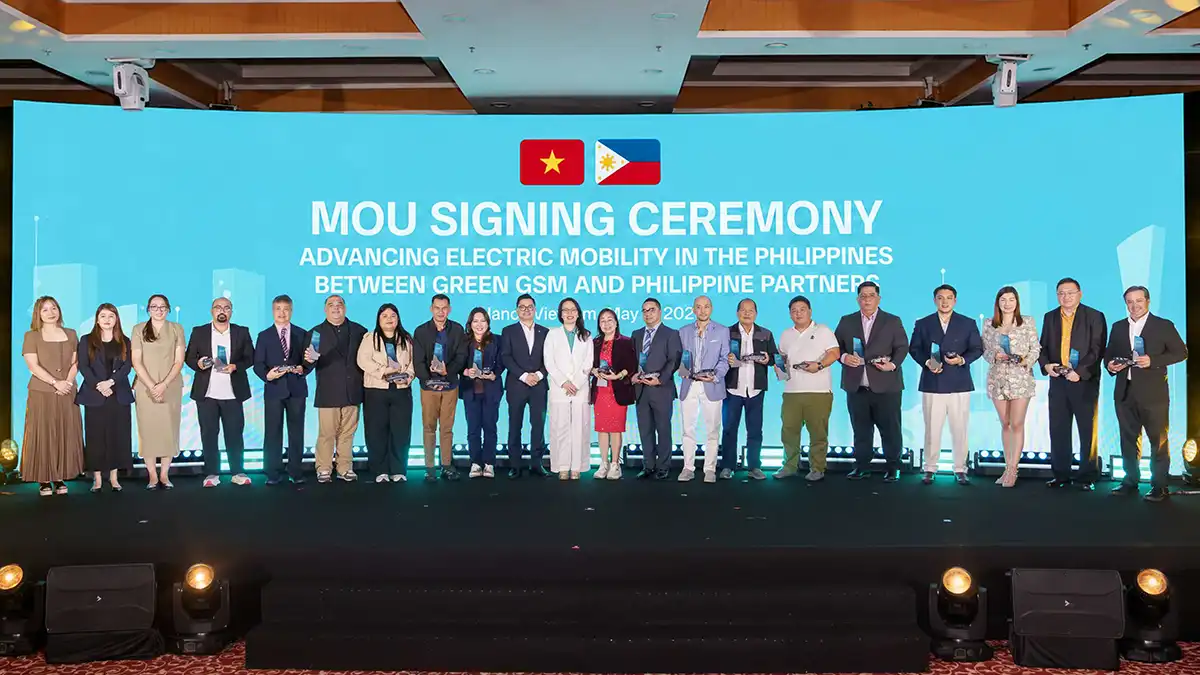
Green GSM has inked memoranda of understanding and deposit agreements with 75 transport companies and cooperatives across the Philippines to support deployment of up to 18,497 VinFast electric vehicles for passenger transport operations, the company said.
The agreements cover operators in Metro Manila, Cebu, Davao, Iloilo, Cagayan de Oro, Cavite, Pampanga, Bacolod, Batangas, Baguio and Ozamiz, targeting strong urban mobility demand and the shift to cleaner transport solutions. The planned fleet will include VinFast VF 5/Herio Green and Limo Green models, intended for ride-hailing and passenger services via a mix of direct investment and long-term leasing.
This phase follows an initial 2,500-vehicle deployment with Xentro Group and represents an expansion of Green GSM’s all‑electric mobility platform across Southeast Asia. The partnership-led model combines centralized operating standards with locally managed fleet operations and driver networks to maintain consistent service while adapting to local market dynamics.
“This partnership reflects a broader shift underway across the transport industry, where scale, efficiency, and sustainability are becoming increasingly interconnected. Green GSM’s platform provides a structured approach to deploying electric mobility, combining operational clarity with long-term growth potential. We see this not only as an opportunity in the Philippines, but as part of a wider transformation of urban mobility across Southeast Asia,” said Gio Colmenares, CEO of Asia Prime Force Corporation.
“For transport cooperatives, the transition to electric mobility is not only about technology, but also about long-term sustainability for our members. Green GSM’s model enables us to modernize our fleets while maintaining operational stability and access to consistent demand. This creates a clear pathway for cooperatives to participate in the next phase of urban transport development,” said Dave Baldoza, Managing Director of Green EV Transport Corp and Green Fast Corporation.
“Scaling electric mobility requires coordinated investment across vehicles, infrastructure, and operations. Partnership models like this demonstrate how different parts of the ecosystem can work together to enable deployment at scale. We see strong potential for this approach to accelerate adoption not only in the Philippines, but across emerging urban markets in the region,” said Rachel Ann Villanueva, Chairwoman of Green Will Corporation.
“Electrifying transportation is no longer a future trend, but an ongoing transition already taking place across major urban centers worldwide. Southeast Asia stands out as one of the most dynamic regions for this shift. Scaling electric mobility requires more than technology. It requires operating models that can maintain consistency across markets while adapting to local conditions. Through its platform and partnership approach, Green GSM aims to advance electric mobility in a practical and sustainable way while maintaining unified service standards across the ecosystem,” said Nguyen Van Thanh, Global CEO of GSM.
Partners are expected to finalize vehicle orders and begin phased operations through 2026, reinforcing the move toward large-scale electrification of urban transport networks and enabling broader participation from transport companies and cooperatives nationwide.